Summary:
StoneX, a Fortune 100 company wanted more of a multimedia presence. They had one successful paid webinar, but wanted to expand. They wanted more content that would boost brand awareness, direct valuable business to company digital products and live events, and generate revenue.
My role:
Enhancing the quality of current webinars, developing a process to create further digital content, working with SMEs within the company to develop new offerings, research and acquire new technology, find digital asset management solutions to host and store content, standardize equipment across offices, monitor live events and provide tech support, provide post-production services, and make sure the whole thing followed strict regulatory guidelines.
Results:
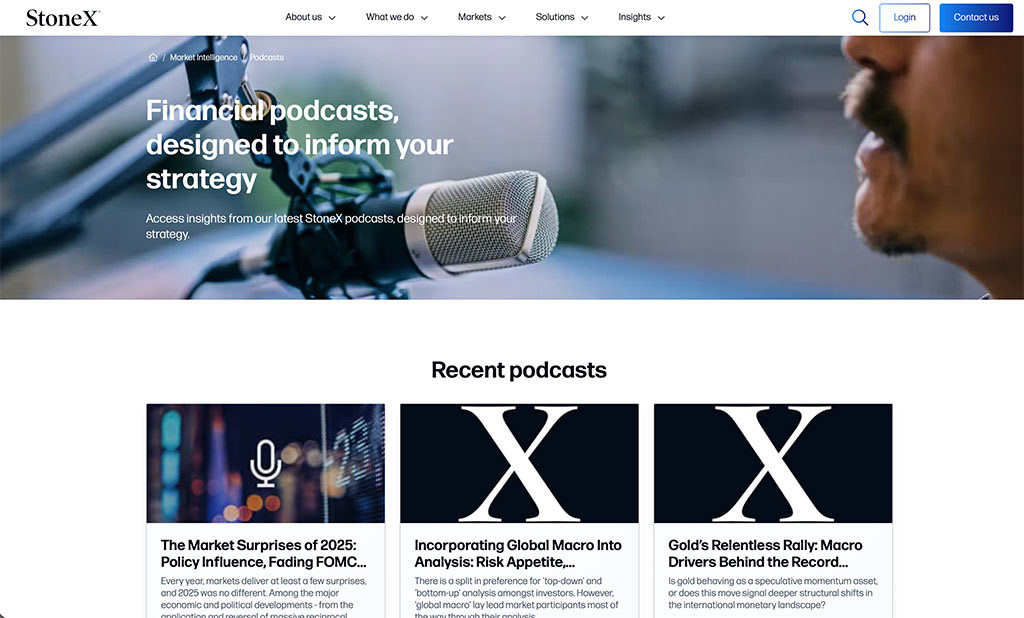
• 500% audience growth after making one webinar into a dozen and creating six new podcasts.
• An average of 3% click-through on CTAs associated with webinars, directing valuable clients to company events and apps.
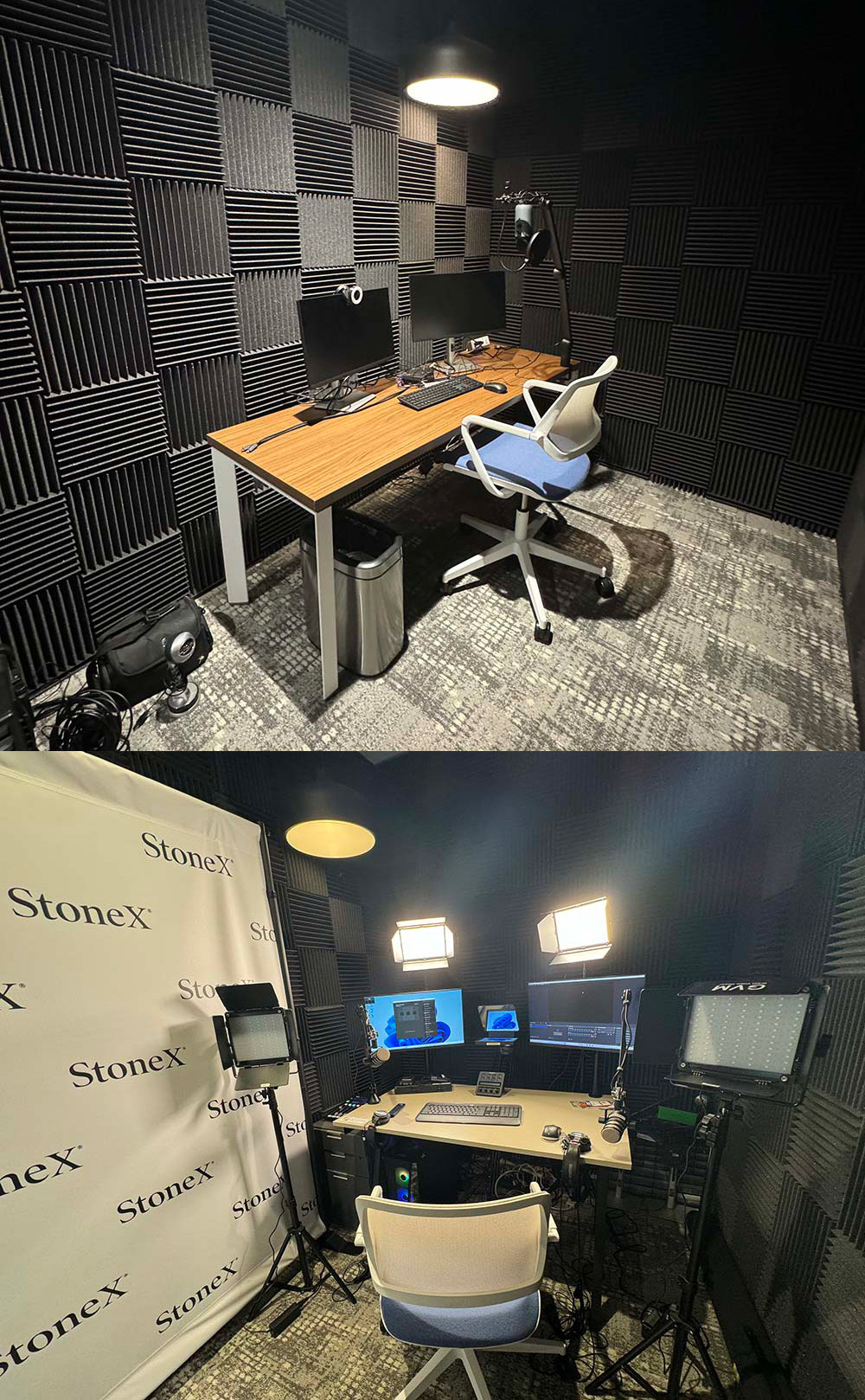
• Mini-broadcast studios built out across offices in Chicago, New York, Miami and Kansas City, allowing for a convenient way for SMEs in the company to make professional-level content.
When I first started at StoneX the first assignment I got was “Our one webinar sounds like it’s being broadcast from inside a submarine. Fix that.” It was a pretty simple matter of seeing what the setup was for the host of the webinar, and how to improve it, using the tools I had within my budget.
Seven years later, we had nearly a dozen podcasts and webinars from company SMEs with a 500% increase in audience.
How did it go from making audio sound better for one webinar to producing a whole array of webinars and podcasts?
First, I focused on improving our one paid webinar from our primary subject matter expert. Improving the equipment being used like cameras and microphones—it’s amazing what even a mid-range Shure microphone can do for you over a laptop condenser microphone. There were also simpler things like setting up best practices for the host to follow, like how close they should be when speaking into the microphone to making sure they stay in the camera frame for the preview window.
We had an on-demand platform so that anyone who subscribed to our paid webinars could view things later if they missed it. I set about to do post-production enhancements to every webinar so that there was a much cleaner, more professional look and sound to it when it was viewed later, and sourced for clips that we could share on social media.
Of course, being a live event we wanted to enhance the look of the webinar and the experience of the webinar for the user. We found WebEx was lacking a lot of features we wanted, like the ability to customize the viewing space, polling, and a simple-to-moderate chat. We then went with On24 which provided the features we needed.
The webinars not only generated leads, but also informed us about clients. With the tools available to us in Wistia, we could see heatmaps related on on-demand content that could tell us when interest peaked and when in dropped off, telling us what subjects mattered to our clients and what kept them the most engaged.
From there it was a matter of expanding.
We found more SMEs in the company, people who not only were experts in their field but felt comfortable enough talking in front of a microphone and were doing it on a regular basis.
In each case I worked with them to understand what kind of content they wanted to bring, what they hoped to accomplish in bringing it, and seeing how often they wanted to bring that content out.
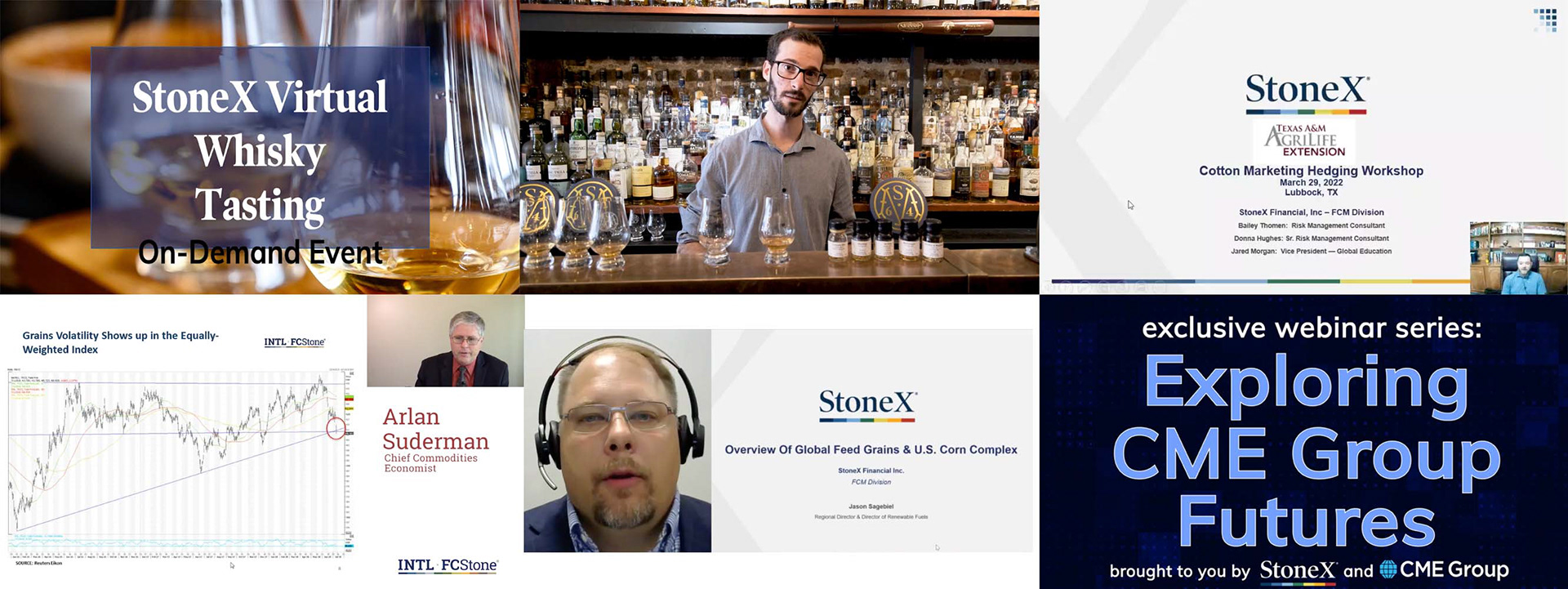
I then had the task of making sure they had the tools needed to actually produce the content. One trick about it was that being that the SMEs were in offices across the US and beyond, I could not be there in person to troubleshoot. Any recording setup had to be something I could troubleshoot remotely.
The solution involved having a uniform standard for all the offices. Every office had different needs but there were many needs that overlapped. Also, there was a very limited budget, so that did narrow down the choices of equipment we could use. I did manage to get a solution where we had two standing microphones, two lavaliere mics, a mixer, some lighting kits, and a removable backdrop standard across all spaces. There were also computers allocated with dual monitors.
In some spaces, where the budget allowed, we had people come in and install such things as soundproofing on the walls, and a rail setup for the lighting. I would have liked a more extensive setup for converting meeting rooms to recording spaces, but I had to make do with the budget.
Once we had everything in place, it was all about working with stakeholders to develop the content. Figuring out titles, making logos, and getting messages out on social media. Figuring out CTAs, landing pages, scheduling and then getting it going.
Scheduling it all out for every bit of content, whether it be a paid webinar, or a free podcast, or social media postings, is essential. Consistency is key to building an audience. If you put out content on a certain day at a certain time, you will build an audience. Having a greater frequency of posts also helps, but having the same content at the same time every time is really how you keep people around.
What happened, then? Well, the company went from having one regular webinar to a dozen webinars, zero podcasts to four podcasts, and went from having 200 regular webinar viewers to over a thousand across all sorts of branded content. There was also a 3% average click through on CTAs for videos, bringing people to sign up for other events or download company-branded applications.
I was proud to have built things out from such a simple beginning to a wide array of media offerings, while enhancing brand awareness and producing a quality, consistent product.